There are no items in your cart
Add More
Add More
| Item Details | Price | ||
|---|---|---|---|

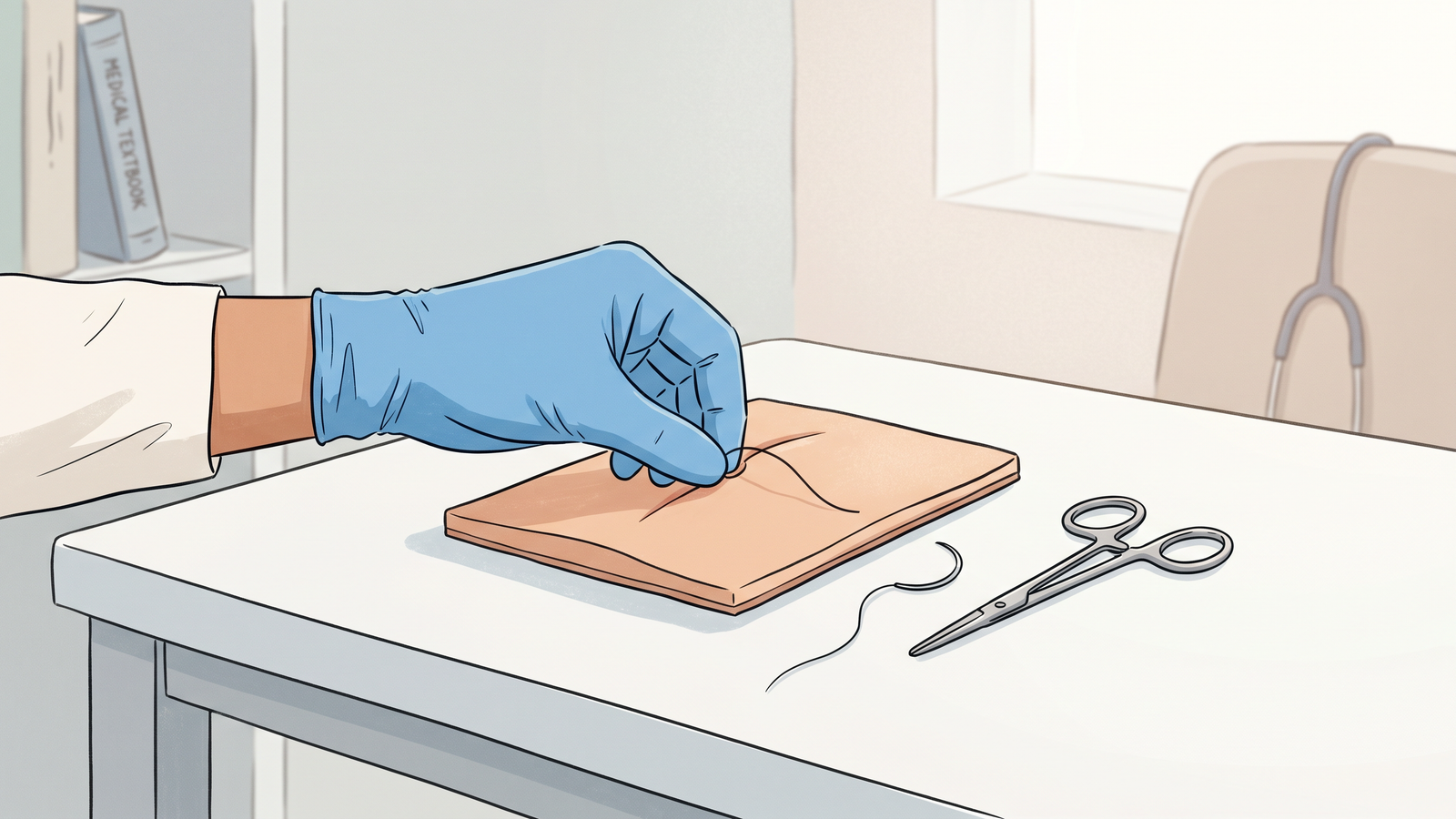
A patient walks into your clinic with a clean forearm laceration after a minor accident. The wound is straightforward, bleeding is controlled, and there are no signs of tendon or nerve involvement. Yet many doctors still reach for a referral slip instead of a suture kit. While referrals are necessary for complex injuries, routinely referring to simple cases can affect both patient convenience and practice growth.
This is where a suturing course for MBBS doctors becomes valuable. As patient expectations evolve in 2026, people increasingly prefer receiving complete care from a trusted family doctor whenever possible.
A practical course for MBBS doctors helps build confidence in wound closure, minor procedures, and OPD-based interventions while improving continuity of care. More importantly, it enables doctors to convert skills learned during medical training into everyday clinical practice.
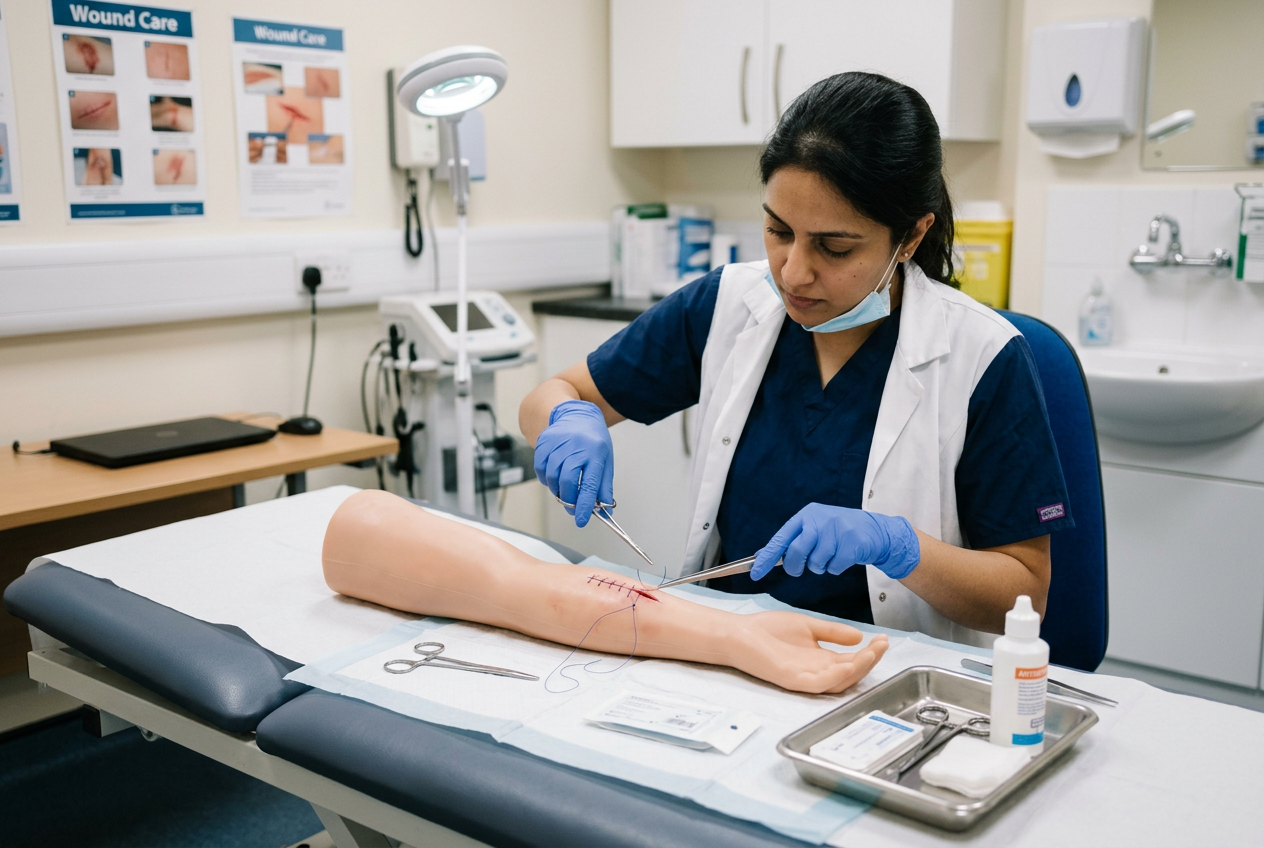
Most doctors learn basic suturing during medical school. However, limited exposure after graduation often causes these skills to fade over time. As a result, even simple lacerations, superficial wounds, and minor skin procedures are frequently referred to surgeons or emergency departments.
The issue is rarely a lack of medical knowledge. Instead, it stems from a lack of confidence and regular practice. Many doctors worry about complications, wound infections, or cosmetic outcomes. Others simply do not have a structured system for evaluating wounds and deciding which cases can be managed safely within their clinic.
A well-designed suturing course for MBBS doctors addresses this confidence gap directly. Rather than focusing solely on theory, it teaches practical wound assessment, patient selection, anesthesia techniques, suturing methods, and follow-up protocols that doctors can immediately apply in daily practice.
Patients also notice the difference. When a doctor can assess, treat, and close a wound during a single visit, the experience feels seamless. This convenience improves patient satisfaction and strengthens long-term trust. Over time, doctors who retain these cases often see stronger patient loyalty and more referrals from existing families.
Minor procedures may appear to be a small part of general practice, but they can significantly influence patient perception. Patients value convenience, especially when dealing with injuries that require immediate attention.
While MBBS graduates spend years preparing for competitive exams like NEET PG, many enter clinical practice with limited exposure to hands-on procedural skills. A suturing course for MBBS doctors allows doctors to bridge this gap and provide complete care without unnecessary referrals. Instead of sending patients elsewhere for treatment, doctors can offer definitive management during the initial consultation. This reduces delays, improves outcomes, and creates a stronger patient-doctor relationship.
The financial impact can also be substantial. When clinics manage simple procedures in-house, they generate additional consultation and procedure revenue while increasing the likelihood of repeat visits. More importantly, patients begin to view the clinic as a destination for comprehensive care rather than a referral point.
Building confidence in minor procedures does not happen overnight. The process becomes much easier when doctors follow a structured learning pathway and focus on consistent practice.
The following framework provides a practical roadmap for integrating suturing and minor procedures into routine clinical practice.
The first skill every doctor must master is deciding which cases can be safely managed in a clinic setting. A suturing course for MBBS doctors typically begins with wound assessment because appropriate patient selection is the foundation of successful outcomes.
Doctors should evaluate wound depth, contamination level, injury mechanism, neurovascular status, and time since injury. Understanding referral criteria is equally important. Cases involving tendon injuries, deep tissue involvement, severe contamination, or complex facial trauma may require specialist care.
One of the biggest barriers to performing procedures is poor clinic preparation. Many doctors feel hesitant because they do not have equipment readily available when a suitable case arrives.
A dedicated procedure station should include sterile gloves, suture materials, forceps, needle holders, antiseptic solutions, local anesthetics, dressing materials, and disposal systems.
A suturing course for MBBS doctors often includes guidance on statins in the OPD setup and workflow optimization. When everything is organized and accessible, doctors are more likely to perform procedures confidently and efficiently.
Technical proficiency comes from repetition. Every suturing course for MBBS doctors should focus on a few high-value techniques that cover the majority of common wound presentations.
Simple interrupted sutures remain the most versatile option for everyday lacerations. Vertical mattress sutures help relieve tension and improve wound edge eversion. Horizontal mattress sutures can be useful in fragile skin, while subcuticular techniques improve cosmetic outcomes in selected cases.
The goal is not to learn every possible suturing method. Instead, doctors should become highly competent with a small number of techniques that are frequently used in general practice.
Regular practice on simulation models, animal tissue, or procedural workshops can significantly accelerate skill development.
Even technically perfect suturing can fail if infection control standards are not maintained. Safe procedural practice requires proper anesthesia administration, sterile preparation, and adherence to infection prevention guidelines.
A high-quality suturing course for MBBS doctors teaches doctors how to administer local anesthesia comfortably while minimizing patient discomfort. It also reinforces aseptic techniques that reduce complications and improve healing outcomes.
Patients often judge procedural quality based on comfort and professionalism. Good anesthesia technique and meticulous sterile practices contribute significantly to patient satisfaction.
Successful wound management extends beyond the final stitch. Proper follow-up instructions play a critical role in preventing complications and ensuring optimal healing.
Doctors should provide clear guidance regarding dressing changes, activity restrictions, warning signs of different types of infections like urinary tract infection, and suture removal timelines. Written instructions often improve compliance and reduce confusion.
A comprehensive suturing course for MBBS doctors emphasizes the importance of follow-up protocols because excellent outcomes depend on continuity of care. Consistent post-procedure management also increases patient confidence and encourages future visits.
Many procedural challenges arise from avoidable mistakes rather than technical limitations. Recognizing these errors early can accelerate learning and improve patient outcomes.
Some doctors automatically refer patients before performing a thorough assessment. This limits opportunities for skill development and prevents doctors from identifying cases that could be safely managed in-house.
Reading about suturing is helpful, but procedural confidence comes from hands-on practice. Doctors who practice regularly develop better technique, speed, and decision-making skills.
Proper records protect both patients and practitioners. Documentation should include injury details, examination findings, procedural steps, consent discussions, and follow-up instructions.
Poor communication after the procedure can lead to unnecessary complications. Clear instructions improve healing outcomes and reduce patient anxiety.
Many doctors delay learning procedures because they worry about mistakes. However, structured training and supervised practice significantly reduce risk while improving competence.
Clinical Guruji focuses on practical, case-based learning designed specifically for busy practitioners. Instead of overwhelming doctors with excessive theory, the platform emphasizes real-world scenarios that mirror everyday OPD practice.
Through structured video demonstrations, procedural checklists, and step-by-step guidance, doctors can gradually build confidence in wound assessment, suturing, anesthesia administration, and follow-up care. This practical approach makes learning more accessible and easier to implement in daily practice.
For doctors looking to strengthen their procedural skills, a suturing course for MBBS doctors can serve as an important step toward providing more comprehensive patient care. By combining structured learning with deliberate practice, doctors can safely expand their capabilities and improve both patient outcomes and clinic performance.
Explore all our courses here!
Yes. Most doctors learn basic suturing during medical school, but may not use the skill regularly in practice. A suturing course for MBBS doctors helps refresh foundational concepts, rebuild confidence, and provide structured guidance on wound assessment, suturing techniques, and post-procedure care. The focus is on practical application rather than advanced surgical procedures.
The timeline varies depending on practice frequency. Many doctors begin feeling more comfortable with wound assessment and simple laceration closure within a few weeks of consistent practice. Confidence grows significantly when learning is combined with hands-on repetition and real-world case exposure.
Most doctors can safely manage uncomplicated lacerations, superficial wounds, minor skin injuries, and selected office-based procedures after appropriate training. However, complex wounds involving tendons, nerves, deep tissue damage, significant contamination, or cosmetic concerns may still require referral to a specialist.
Yes. Patients often prefer receiving complete care from a trusted doctor rather than visiting multiple facilities for routine procedures. When minor injuries can be assessed and treated during the same visit, patient satisfaction tends to improve, leading to stronger long-term relationships and increased retention.
Doctors should prioritize courses that focus on practical demonstrations, case-based learning, wound assessment protocols, local anesthesia techniques, infection prevention, and post-procedure management. A good program should provide clear, step-by-step instructions that can be implemented immediately in daily OPD practice.